

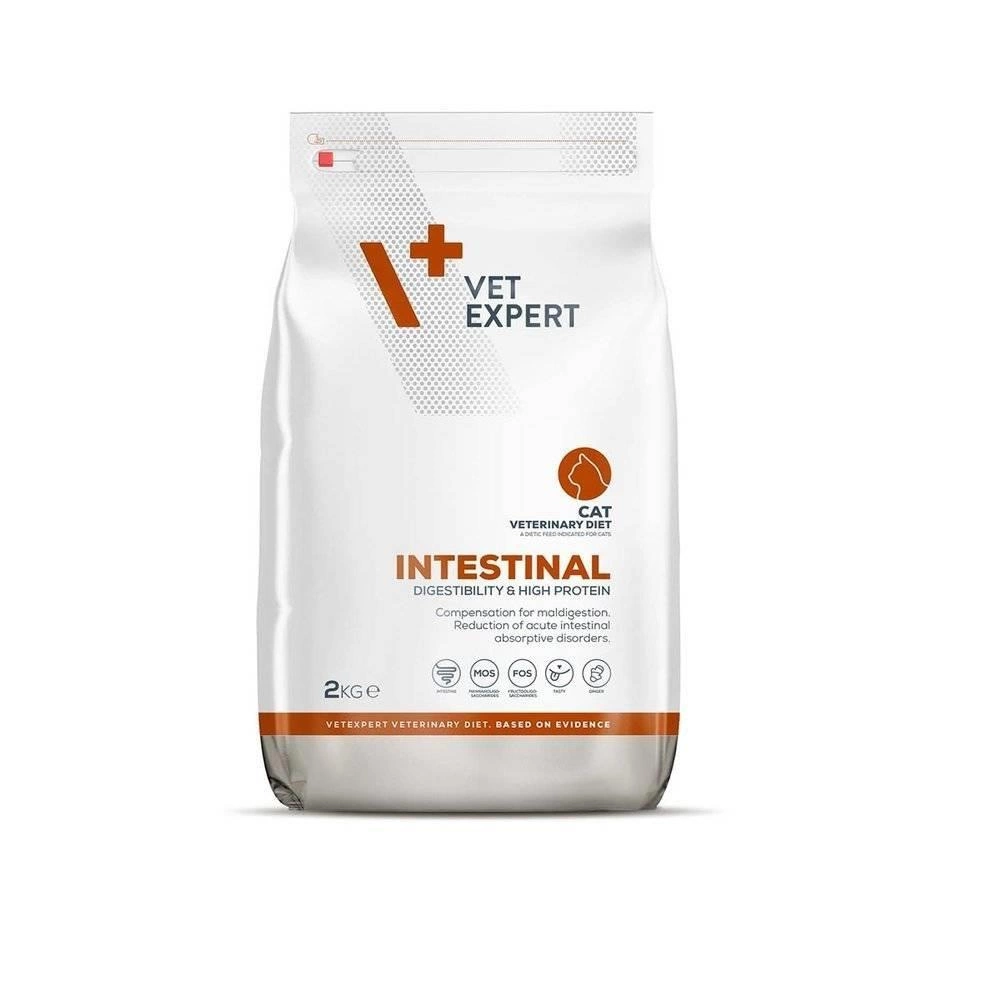
VETEXPERT Veterinary Diet Cat Intestinal 2kg

- Dry food for cats with gastrointestinal disorders: inflammation of the stomach, small intestine, and large intestine, accompanied by diarrhea. Package contains 2 kg.
VETEXPERT Veterinary Diet Cat Intestinal 2kg - Product Description
A complete and balanced dietetic food for cats, recommended for cats with digestive and intestinal absorption disorders. It compensates for digestive disorders and reduces absorption disorders. The food has an increased content of electrolytes and highly digestible ingredients.
Composition
- Dehydrated poultry protein
- Corn
- Corn meal
- Rice
- Poultry oil
- Potato protein
- Poultry liver hydrolysate
- Fish oil
- Corn starch
- Psyllium seeds
- Dried whole eggs
- Yeast
- Beet pulp
- Cellulose
- Minerals
- Calendula extract
- Inulin (FOS)
- MOS
Composition analysis
- Crude protein 38.00%
- Crude oils and fats 20.00%
- Carbohydrates (calculated) 23.00%
- Crude fiber 3.00%
- Crude ash 8.50%
- Moisture 8.00%
- Calcium 1.10%
- Phosphorus 0.80%
- Sodium 0.40%
- Potassium 0.80%
- Vitamin A 20,000 IU/kg
- Vitamin D3 1,750 IU/kg
- Vitamin E 140 mg/kg
- Vitamin C 30 mg/kg
- Iron 75 mg/kg
- Iodine 1.5 mg/kg
- Copper 10 mg/kg
- Manganese 7.5 mg/kg
- Zinc 120 mg/kg
- Selenium 0.12 mg/kg
- Taurine 2,300 mg/kg
Additives per 1 kg
- Vitamin A – 20,000 IU/kg
- Vitamin D3 – 1,750 IU/kg
- Vitamin E – 140 mg/kg
- Vitamin C – 30 mg/kg
- Iron (ferrous sulfate monohydrate) – 75 mg/kg
- Iodine (potassium iodide) – 1.5 mg/kg
- Copper (copper sulfate pentahydrate) – 10 mg/kg
- Manganese (sulfate) – 7.5 mg/kg
- Zinc (zinc oxide) – 120 mg/kg
- Selenium (sodium selenite) – 0.12 mg/kg
- Taurine – 2300 mg/kg
Dosage
| Cat's weight (kg) | 1 | 2 | 3 | 4 | 5 | 6 | 7 | |
| daily dose in (g) | body mass index < 5 |
25 | 40 | 52 | 63 | 73 | 83 | 92 |
body mass index > 5 |
32 | 42 | 50 | 56 | 61 | 68 | 70 |
The manufacturer does not restrict the age of the animal.
Additional information
High digestibility increases the amount of nutrients and helps to balance digestive disorders.
The limited amount of fat allows the diet to be used in animals with absorption disorders.
They are a source of fructooligosaccharides used by gastrointestinal bacteria. This stabilizes the intestinal microflora and provides energy for the cells of the large intestine.
The increased electrolyte content helps to compensate for losses caused by vomiting or diarrhea.