

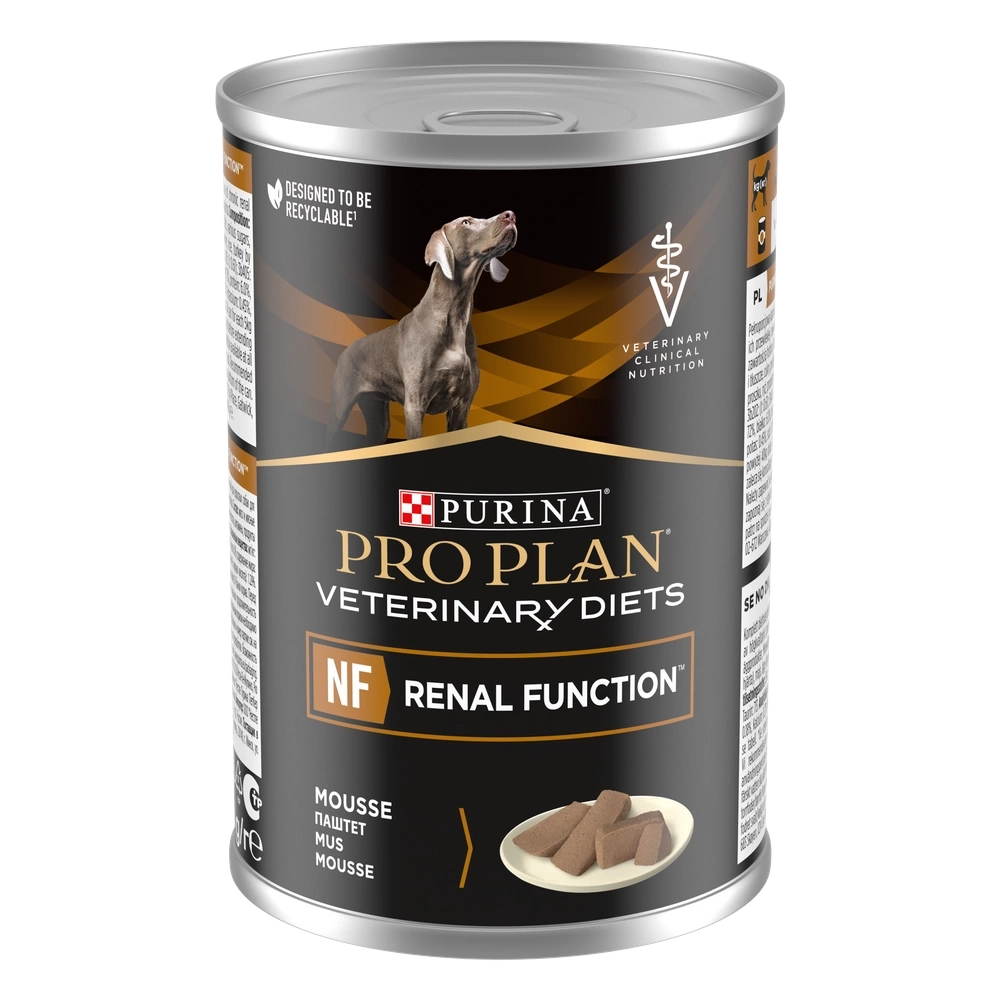
PURINA Pro Plan Veterinary Diets NF Renal Function 400g

- Wet food for adult dogs, used for kidney failure. 400g package.
Save by buying more


no pork PURINA Pro Plan Veterinary Diets NF Renal Function 12x400g

no pork PURINA Pro Plan Veterinary Diets NF Renal Function 18x400g
PURINA Pro Plan Veterinary Diets NF Renal Function 400g - Product Description
PURINA Veterinary Diets NF Renal Function is a dietary food for dogs, low in phosphorus and with a limited amount of high-quality protein, designed to support kidney function in cases of chronic renal failure.It is a complete, balanced food for adult dogs.
Composition
- Meat and animal derivatives
- Cereals
- Oils and fats
- Eggs and egg products
- Sugars
- Minerals
- Protein sources: liver, heart, corn, egg powder, rice, turkey
Composition analysis
- Moisture content 72%
- Protein 5.4%
- Total sulfur amino acids
- Fat 7.6%
- Omega 6 fatty acids 1.2%
- Omega-3 fatty acids 0.1%
- Carbohydrates 12.9%
- Crude fiber 0.3%
- Calcium 0.22%
- Phosphorus 0.11%
- Potassium 0.45%
- Magnesium 0.03%
- Sodium 0.08%
- Sulfur 0.12%
Additives
- Vitamin A (830 IU/kg)
- Vitamin D3 (115 IU/kg)
- Vitamin E1 (24.1 mg/kg)
- [3b202] (0.46 mg/kg)
- Vitamin E4 (2.9 mg/kg)
- Vitamin E5 (4.2 mg/kg)
- [3b605] (58.8 mg/kg
Dosage
| Dog's weight | Weight reduction | Weight maintenance |
| 1–5 kg | ½ – 1 | ½ – 1⅔ |
| 5–10 kg | 1–1¼ | 1⅔ – 2⅔ |
| 10–20 kg | 1¼ – 2⅓ | 2⅔ – 4¼ |
| 20–30 kg | 2⅓ – 2¾ | 4¼ – 5½ |
| 30–40 kg | 2¾ – 3 | 5½ – 6 ⅓ |
| 40–50 kg | 3 – 3¼ | 6 ⅓ – 7¾ |
| 50 kg+* | 3¼ – 4 + | 7¾+ |
The manufacturer does not limit the size of the animal.
Additional Information
Indications:
Renal failure.
Liver diseases associated with hepatic encephalopathy;
Early stage of congestive heart failure.
Hypertension.
Contraindications:
Diseases requiring increased protein or phosphorus intake.
Pregnancy, growth period.
NF also contains reduced calcium, vitamin D3, and urine alkalizing ingredients, which are recommended for patients with diagnosed oxalate stones.
Reduced phosphorus content - Helps prevent the development of hyperphosphatemia and associated kidney damage.
Limited protein content, but high in quality - Limits the formation of urea toxins and the absorption of non-essential amino acids.
Reduced sodium content - Prevents hypernatremia during periods of reduced ability to regulate sodium levels.
Source of omega-3 and omega-6 fatty acids - Helps reduce hypertension in the glomeruli and minimizes inflammatory processes in the diseased kidneys (thereby reducing the risk of hypertension).
Diet that does not acidify urine - Leads to a urine pH of 6.7-7.1 when fed ad libitum, which reduces the risk of acidosis and supports the treatment of oxalate urolithiasis.
Desired urine pH 7.1 +/- 0.4.